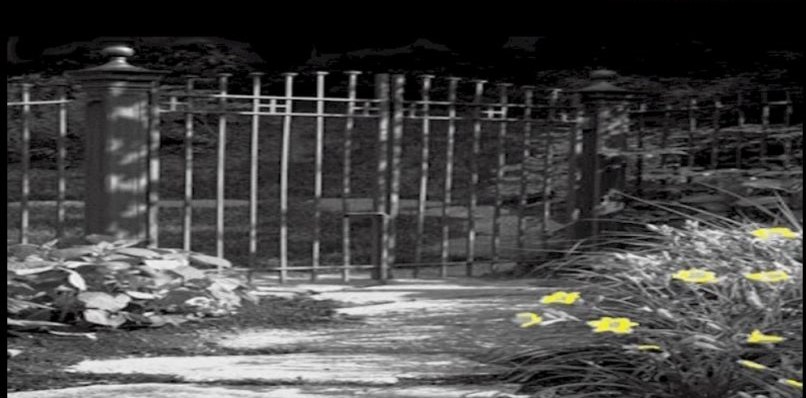
Autumn is already upon us. Leaves are changing. Summer is fading fast, kissing us only every so often like a bored lover.
The atmosphere is unstable, it’s a time when anything can happen. Hurricane Isabel had everyone talking. People, sometimes, simply love what is out of their control. Thunderstorms, eclipses, windy days, hurricanes, the sight of a tornado. Nature provides these things for us, a humbling of humankind, to a power greater than our own.
Luckily, while writing a story or a novel we do have control. Perhaps that is what makes writing so enticing. We are God in our own cleverly crafted universe. We control everything, who lives and dies, what they see, hear, taste, smell – if it’s storming or the sky is a sunny blue.
This gift, this responsibility is both invigorating and intoxicating, yet can be difficult to achieve completely.
What makes a horror story a good one? Undoubtedly, what most folks would say is – the atmosphere. Most horror stories don’t take place (completely) on sun-parched lawns on windless, cloudless days. When we think of horror stories we think: dark, dank, foreboding. What exactly, without saying the words, makes a story dark, dank and foreboding? More so than the words themselves, it’s the nuances we create, the anticipation of dread, even the heavy consonants in specific words that help achieve this.
Autumn, for me, is the most inspiring time of the year. When the wind blows a little cooler, and nighttime comes a little sooner – how can you not find inspiration in the dark under a harvest moon?
When creating an atmosphere use words that intimate instead of attack. The best part of a horror movie, after all, is usually before the monster makes its appearance. It’s somewhere between the beginning and middle, when the viewer is still wondering, “What exactly is around that corner?”
How do you feel in the dark? What does it do to your body? How do things look in the dark, between the shadows? There are different levels of darkness like different textures of material. Certain darkness resembles satin, others feel like suede.
Examples of “moody” writing can be found best in the works of Poe, as in this passage from The Fall of the House of Usher:
The room in which I found myself was very large and lofty. The windows were long, narrow and pointed, and at so vast a distance from the black oaken floor as to be altogether inaccessible from within. Feeble gleams of encrimsonod light made their way through the trellised panes, and served to render sufficiently distinct the more prominent objects around; the eyes, however, struggled in vain to reach the remoter angles of the chamber, or the recesses of the vaulted and fretted ceiling. Dark draperies hung upon the walls. The general furniture was profuse, comfortless, antique and tattered. Many books and musical instruments lay scattered about, but failed to lend any vitality to the scene. I felt I breathed an atmosphere of sorrow. An air of stern, deep and irredeemable gloom hung over and pervaded all.
People, generally, don’t much write like this anymore. Our society has become much to hurried to, what some would say, stumble through writing like this. If you go through the paragraph, you can easily pick out the specific words that lend to the foreboding atmosphere. It goes beyond mere description to an almost personification of the room itself. As if the very room he stood in were evil.
Atmosphere is one of the most important aspects in a story. Without it, there wouldn’t be much cohesion between any of the other factors. It is the glass globe in which we choose to place our characters. It is our choice to shake it and watch the snow fly, or to merely leave it on the shelf to gather dust. Either way, the water and everything else inside could not exist without its boundaries.
Originally published in Writer Online 9/22/03